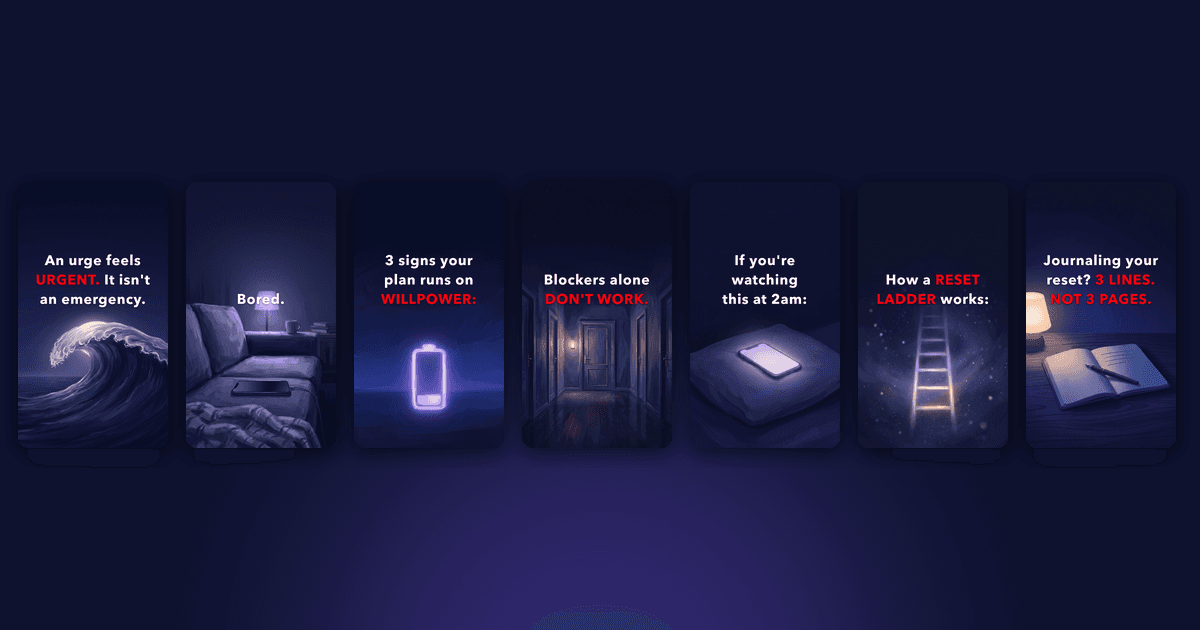
On Saturday I had seven short videos for the week ready in 17 minutes. Then I spent the evening dragging files into TikTok, Instagram and YouTube by hand: 21 uploads, three tabs, copy, paste, set the time. I was sick and stuck on mobile internet, so "the evening" is not a figure of speech.
AI makes the videos now. But nobody trusts it with the last step, pressing "publish". Not the platforms, and not even the browser extension that exists precisely so an AI can click things for me.
A video factory in one evening
I run the social accounts for Reset Ladder, my app for people who want to quit porn without shame or streak counters (on the App Store). One short video a day, and the same video goes to TikTok, Instagram Reels and YouTube Shorts.
A week of videos used to look like this: the plan in Notion, images from ChatGPT, editing in DaVinci. A whole Sunday evening for seven 10-second videos.
Now it looks like this:
- The week's plan is a Markdown file: the text for every frame, two image prompts, and a caption and hashtags for each platform.
- My local image generator reads the file, and Nano Banana draws 13 images. That took three and a half minutes.
- After that, no AI at all. A plain ffmpeg script adds the text, a slow zoom, light film grain and my own music, and exports 1080×1920. Seven videos in seven minutes.
AI only where nothing else will do: the images. Everything that can be written down as rules is done by ordinary code, which doesn't make a different mistake every time.
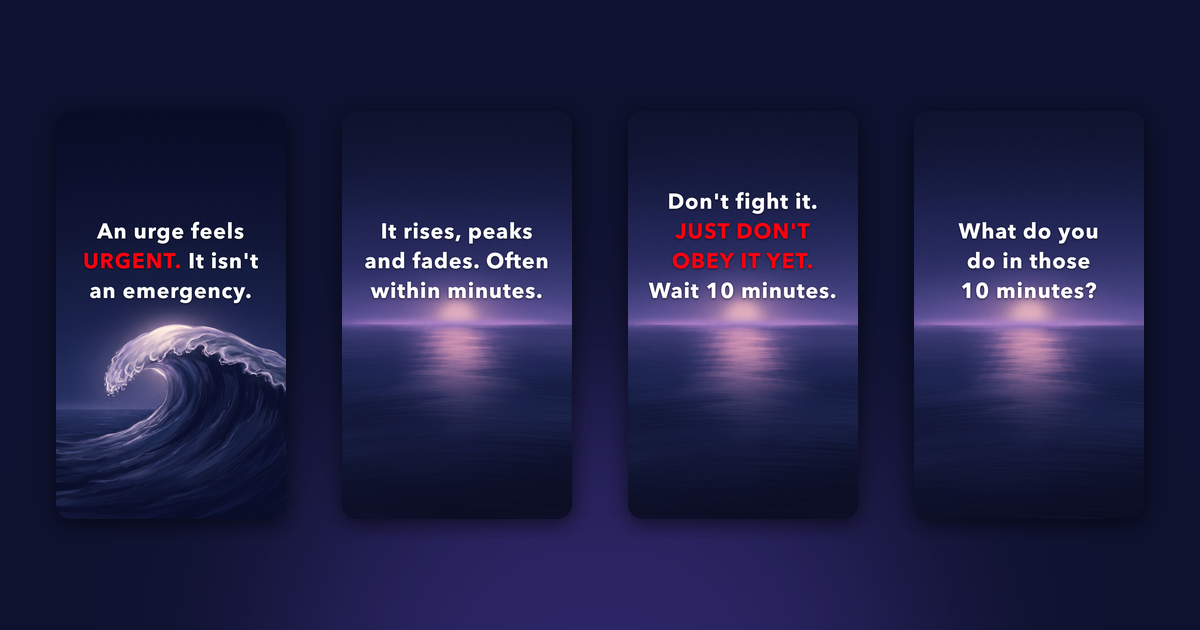
The funny part is where the rules came from. I never described the style in words. The AI opened my old DaVinci videos, measured them frame by frame (text around 100 pixels, 140 pixels between lines, the accent red #FC0010) and wrote that into the spec. Claude Code built the generator from that spec in an evening. The new videos look like the old ones; they just take 17 minutes instead of an evening.
The last mile
All that was left was to schedule 21 uploads. You'd think that's the easiest part to automate.
Attempt 1: AI in the browser. Claude has a Chrome extension that clicks around websites for you. I logged into all three creator studios and asked it to schedule the videos. Every one of them came back with the same answer: "This site is blocked by your site permissions." TikTok Studio, YouTube Studio, Meta Business Suite — all three closed to the agent. I never found where that block lives; those sites aren't in the extension's settings.
Attempt 2: the official APIs. All three platforms have a publishing API. All three come with a catch:
- TikTok — Content Posting API. Until your app passes TikTok's audit, everything it posts is private. The audit takes weeks, and tools built "for my own account" may not pass at all.
- YouTube — Data API, with upload and scheduled publishing. Videos uploaded from an unverified Google project are locked as private until Google audits the project.
- Instagram — Graph API, Reels publishing. Works for your own professional account, but the video has to sit at a public URL, and other people's accounts need App Review. The most realistic of the three.
So technically everything exists. In practice, until the audits are done, my code can only publish TikTok and YouTube videos that nobody will ever see.
Attempt 3: rent someone else's audit. There are middleman services that have already passed every review: you hand them the video, the captions and the time, and they publish. Somewhere from about $24 to $149+ a month. You're not really paying for code. You're paying for someone else's permission.
What I actually did
By hand. The AI built me a page where every day and every platform has its own block with the caption and hashtags: click it and it's copied. Drag the file in, paste the text, set the time. About five minutes per video.
One extra surprise: TikTok in the browser. If you paste hashtags as text, they don't get highlighted until you pick each one from the dropdown. Whether the pasted ones count, I'm still not sure.
Why that's fine (and what it means)
Platforms don't lock publishing out of spite. If any script could post to TikTok on behalf of any account, the feed would turn into spam within a week. An audit is a reasonable filter.
But it leads to a simple conclusion: "the AI does everything" ends at the door of someone else's platform. Making content is now almost free. The bottleneck isn't production anymore; it's access to distribution, and you don't hold the keys to it.
In Soon Everyone Builds Their Own I wrote that homemade tools will eat a lot of SaaS. That's true for everything you control: your data, your files, your process. The channels that belong to the platforms won't open for your own code. There, audits, permissions and patience still decide.
The plan
- Instagram first: my own account, development mode, no waiting.
- YouTube next: apply for the audit now, because the answer can take weeks.
- TikTok last, with a fallback: if they say no, TikTok alone goes through a middleman.
- Multiple accounts from day one: the audit is for the app, not the account, so later I can plug in UghOkay and Screo too.
Until then: copy buttons and five minutes per video.
In one line: 13 images in 3.5 minutes, 7 videos in 7 minutes, and an evening of manual work, because the last click still belongs to a human.
Next up: what the same videos did on three different platforms. Spoiler: on one, the median views dropped almost eightfold. On another, they grew by about as much.